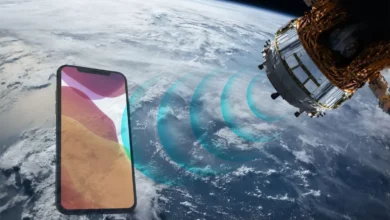
Trump’s FCC Just Handed Musk a Major Win, But Scientists Warn of an ‘Orbital House of Cards’

Elon Musk and SpaceX have scored a major regulatory victory after the U.S. Federal Communications Commission (FCC), under President Donald Trump’s administration, approved a significant expansion of the Starlink satellite network. The decision clears the way for thousands of additional satellites to be deployed in low Earth orbit, strengthening Starlink’s position as the world’s largest satellite-based internet provider.
Supporters see the move as a win for innovation, competition, and global connectivity. But not everyone is celebrating. A growing number of scientists and space sustainability experts are warning that the rapid expansion of satellite constellations could push Earth’s orbital environment toward a dangerous tipping point—what some describe as an “orbital house of cards.”
The debate highlights a widening gap between fast-moving commercial ambitions and the slower, more cautious pace of scientific risk assessment.
What the FCC Decision Means for Musk and Starlink
The FCC’s approval allows SpaceX to significantly scale up its next generation of Starlink satellites. These newer satellites are designed to deliver faster speeds, lower latency, and expanded coverage, especially in remote and underserved regions where traditional broadband infrastructure is limited or nonexistent.
For SpaceX, the decision represents more than just regulatory clearance. It provides:
-
Greater certainty for long-term investment
-
A stronger competitive edge over rival satellite internet providers
-
Expanded capacity for future services, including direct-to-device connectivity
From a policy standpoint, the Trump-era FCC has consistently emphasized reducing regulatory barriers for private companies and accelerating technological leadership. Approving Starlink’s expansion fits squarely within that philosophy.
For Musk, whose companies span electric vehicles, artificial intelligence, and space exploration, Starlink has become a critical pillar. The service already supports millions of users worldwide and plays a role in emergency communications, disaster response, and rural connectivity.
Why Satellite Internet Is So Appealing
Satellite internet has long been viewed as a solution to the digital divide. Unlike fiber or cable networks, satellites don’t require expensive ground infrastructure in every region. Instead, a constellation of satellites can blanket large portions of the planet with coverage.
Starlink’s low Earth orbit approach offers several advantages:
-
Lower latency compared to traditional geostationary satellites
-
Higher data speeds
-
More consistent performance for modern applications
These benefits explain why governments, businesses, and consumers are increasingly relying on satellite networks for connectivity. From a commercial perspective, expanding Starlink makes sense.
But scientists argue that technical success doesn’t eliminate physical limits.
The Growing Concern About Orbital Congestion
Low Earth orbit is no longer an empty frontier. Thousands of active satellites already circle the planet, joined by decades of space debris from defunct spacecraft, rocket stages, and collision fragments.
Each new satellite adds to an increasingly complex environment that must be carefully managed to avoid accidents.
Scientists warning of an “orbital house of cards” are pointing to a scenario where the system becomes so dense that a single failure could trigger cascading consequences.
Their concerns include:
-
Collision risk: Even small fragments of debris travel at extreme speeds and can destroy functioning satellites.
-
Chain reactions: One collision can create thousands of debris pieces, increasing the likelihood of further impacts.
-
Operational strain: Satellite operators must constantly track and maneuver spacecraft to avoid collisions, a process that becomes harder as congestion grows.
This phenomenon is often associated with the Kessler Syndrome, a theoretical scenario in which orbital debris multiplies uncontrollably, rendering certain orbits unusable for years or even decades.
Why Scientists Use the “House of Cards” Metaphor
The phrase “orbital house of cards” reflects how fragile the current system may be. Everything works smoothly as long as:
-
Satellites can reliably maneuver
-
Tracking systems remain accurate
-
Operators coordinate effectively
But if one of these elements fails—due to a software error, hardware malfunction, or external event like a strong solar storm—the entire structure could be destabilized.
Researchers have modeled scenarios where temporary loss of control over satellites leads to rapid escalation of collision risks. Even short disruptions could overwhelm avoidance systems.
In that sense, the system isn’t just crowded—it’s delicately balanced.
Solar Storms and Other Hidden Risks
One often overlooked risk is space weather. Solar storms can interfere with satellite electronics, GPS signals, and tracking data. During intense solar activity, Earth’s upper atmosphere can expand, increasing drag on satellites and altering their orbits.
If many satellites experience these effects simultaneously, operators may struggle to maintain safe separation distances.
Scientists worry that large satellite constellations amplify this vulnerability. The more objects in orbit, the harder it becomes to manage unexpected disruptions.
The Regulatory Gap in Space Governance
While satellite technology has advanced rapidly, global rules governing orbital traffic have not kept pace.
Currently:
-
Most regulation happens at the national level
-
International coordination is limited
-
There is no central global authority managing orbital traffic in real time
The FCC’s role is to manage spectrum and licensing, not to enforce comprehensive space sustainability standards. Critics argue that approvals often focus on technical compliance rather than long-term environmental impact.
As a result, decisions that make sense from a national economic or political perspective may not fully account for global orbital risks.
Industry Response to Safety Concerns
SpaceX has repeatedly stated that it takes orbital safety seriously. The company highlights features such as:
-
Autonomous collision-avoidance systems
-
Satellite deorbiting plans at end of life
-
Transparency with tracking data
These measures do reduce risk, but scientists caution that no system is foolproof—especially at massive scale.
Other companies planning large constellations, including competitors to Starlink, face similar scrutiny. The issue isn’t limited to one company, but to the overall trajectory of satellite deployment.
Innovation vs. Sustainability: A Difficult Balance
The heart of the debate is not whether satellite internet is useful—it clearly is. The real question is how fast expansion should occur and under what safeguards.
Supporters of rapid deployment argue:
-
Connectivity is essential for economic development
-
Delays slow innovation and competition
-
U.S. leadership in space depends on decisive action
Critics counter that:
-
Orbital space is a shared global resource
-
Irreversible damage could harm future generations
-
Safety frameworks should evolve before expansion accelerates further
Both sides agree on one thing: space is becoming more important to daily life, not less.
What Comes Next?
The FCC’s approval is unlikely to be the final word on satellite expansion. As orbital congestion increases, pressure is mounting for:
-
Stronger international cooperation
-
Updated space traffic management systems
-
Clearer sustainability standards
Scientists, regulators, and industry leaders are increasingly calling for proactive solutions rather than reactive responses after a major incident.
Whether governments act quickly enough remains an open question.
Final Thoughts
The FCC’s decision to approve a major expansion of Starlink represents a significant win for Elon Musk and reinforces a policy approach that prioritizes rapid technological advancement. For millions of users, it promises better connectivity and expanded access to the digital world.
At the same time, scientific warnings about an “orbital house of cards” highlight the risks of moving too fast in an environment that cannot easily recover from large-scale disruption.
As humanity’s reliance on space infrastructure continues to grow, the challenge will be finding a sustainable path forward—one that allows innovation to thrive without turning Earth’s orbit into an unsolvable problem.